
Elementor Website Design: Why It Is a Great Choice for Modern Businesses
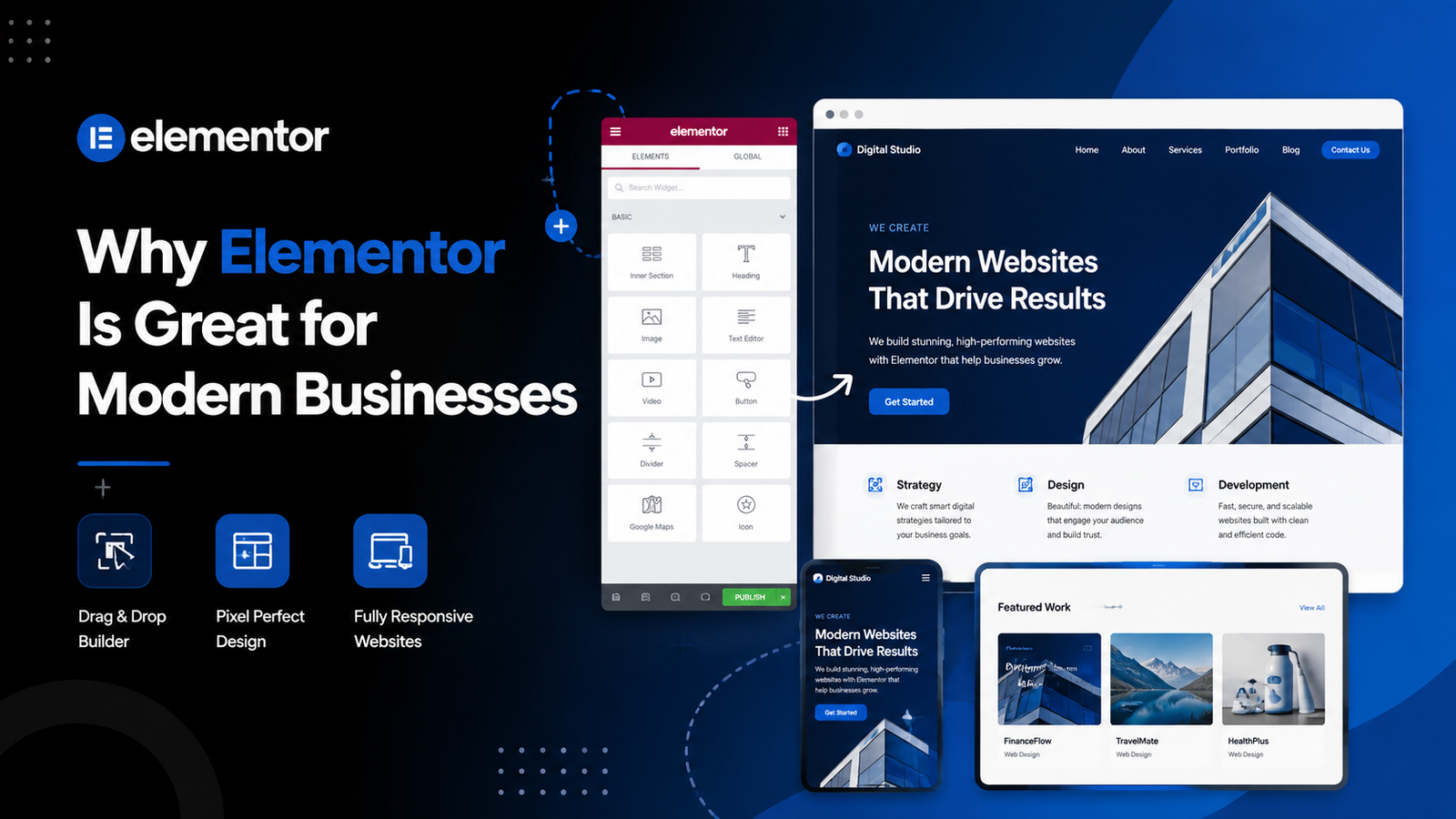
Choosing the right website direction is easier when the advice is practical, honest and connected to real business goals. This guide explains Elementor website design in a way that helps you make a confident decision without relying on vague promises.
What Is Elementor?
Elementor is a visual website builder for WordPress. It helps create custom page layouts without editing every section manually in code. The official Elementor help center is available at Elementor documentation.
Why Businesses Use Elementor
Businesses use Elementor because it can make page creation faster, flexible and easier to update. It is especially useful for landing pages, service pages, portfolio pages and marketing sections.
Advantages of Elementor Website Design
Flexible Visual Design
Elementor allows custom sections, columns, spacing and widgets, which helps a website feel less generic.
Responsive Controls
A developer can adjust layout, spacing and visibility for desktop, tablet and mobile views.
Reusable Layouts
Templates and repeated sections can speed up future updates.
Business-Friendly Editing
Website owners can update text and images more easily after handover.
Integration with WordPress
Elementor works inside WordPress, so content, plugins and pages remain part of the same CMS.
WooCommerce Integration
Elementor Pro can support WooCommerce design workflows when used with the right setup.
Fast Design Workflow When Used Correctly
Elementor can speed up design, but only if the page structure stays organized.
Elementor Free vs Elementor Pro
| Feature Area | Elementor Free | Elementor Pro |
|---|---|---|
| Basic page building | Available for many common layouts. | Includes more advanced widgets and workflow options. |
| Theme building | Limited. | Pro features can support headers, footers and templates depending on setup. |
| WooCommerce design | Limited. | More ecommerce design options are available. |
| Forms and marketing widgets | Limited. | More built-in options are available. |
Can Elementor Websites Be Fast?
Yes, but performance depends on implementation. Avoid unnecessary widgets, oversized images, excessive animations and too many plugins. For performance fundamentals, web.dev has a helpful performance learning resource.
Is Elementor Good for SEO?
Elementor can be SEO-friendly when headings, content structure, speed, mobile layout and internal links are handled properly. Elementor itself is not a substitute for helpful content and technical SEO basics.
When Elementor Is a Good Choice
- Business websites.
- Landing pages.
- Portfolio sites.
- Service pages.
- Small to medium WooCommerce stores.
- Websites where owners need easier editing.
When Elementor May Not Be the Best Choice
Elementor may not be ideal for highly complex web applications, unusual dashboards or projects where every byte of frontend output must be custom-engineered.
Common Elementor Design Mistakes
- Too many sections.
- Inconsistent spacing.
- Heavy animations.
- No mobile adjustments.
- Unoptimized images.
- Poor heading hierarchy.
Best Practices for Professional Elementor Websites
- Plan sections before building.
- Use consistent spacing.
- Optimize images.
- Keep widgets purposeful.
- Test mobile views.
- Review performance after launch.
Frequently Asked Questions
Is Elementor good for business websites?
Yes, when used carefully. It is flexible, editable and suitable for many business websites.
Is Elementor Pro necessary?
Not always, but Pro can help with advanced templates, forms and WooCommerce-related design needs.
Can Elementor be slow?
It can be slow if poorly built. Good hosting, optimized images and clean structure matter.
Can I edit an Elementor website myself?
Yes, with basic guidance you can update text, images and many sections.
Is Elementor good for SEO?
It can be, if content structure, speed and technical basics are handled well.
Need a Professional Elementor Website?
If you want an Elementor website that stays clean, responsive and easy to manage, explore my website services and contact me.
View Elementor Services | Discuss Elementor Project
How to Use Elementor Professionally
Elementor website design works best when the builder is treated as a design system, not a place to stack random widgets. Consistent spacing, reusable sections and careful mobile adjustments make the website easier to maintain.
A professional Elementor build should still follow web design fundamentals. Headings need hierarchy, images need optimization, buttons need clear actions and sections need a purpose.
For many businesses, Elementor is attractive because owners can update content later. That advantage disappears if the page structure is messy or too dependent on complicated styling tricks.
Elementor Performance Checklist
- Use only necessary widgets.
- Optimize images before upload.
- Avoid excessive motion effects.
- Keep sections and containers organized.
- Review mobile and tablet layouts separately.
- Use caching and performance tools carefully.
- Remove unused plugins where possible.
When to Ask for Elementor Pro
Elementor Pro may be useful when the project needs advanced templates, forms, theme parts or WooCommerce design features. However, Pro should not be added just for the label; it should solve a real workflow or design need.
Ask your developer which Pro features are required and how they will affect editing, speed and maintenance.
Practical Notes Before You Start
A good website decision should be based on audience, business model, content quality, technical requirements and the way the site will be managed after launch. The design is important, but the structure behind that design is what makes the website useful over time.
For most businesses, the best approach is to start with a clear version-one scope. Build the pages and features that support real customer action first, then improve the website as the business learns from visitor behavior and customer feedback.
Mobile experience deserves special attention. Many visitors will not patiently zoom, pinch or search through crowded layouts. Buttons, forms, menus, product cards, text size and page speed should all be reviewed on real mobile widths before launch.
Content is another common bottleneck. A developer can create the structure, but the business still needs clear service descriptions, product details, policies, images and trust-building information. Preparing these early reduces delays and improves the final result.
What to Prepare Before Contacting a Developer
- A short summary of your business and audience.
- The main goal of the website or page.
- Required pages, features and forms.
- Existing website URL if there is one.
- Brand assets, images and content drafts.
- Reference websites and design preferences.
- Timeline, budget range and support expectations.
How to Review the Finished Work
When the work is ready for review, check more than the homepage. Test navigation, mobile layout, forms, important buttons, page speed, image loading and whether the content can be edited easily.
Ask for a short handover explanation if you will manage the site yourself. Knowing how to update text, images, products or blog posts can save time after launch.
Detailed Planning Guide for This Topic
A strong decision about elementor website design should begin with discovery. Discovery means understanding the business model, target audience, key services or products, visitor objections, required actions and the type of trust signals the website needs.
The next step is page planning. Even a small website benefits from a clear structure: homepage, about, service or product pages, contact page, policy pages where needed and blog content if search visibility matters. Without structure, design becomes decoration instead of communication.
Content planning should happen before final design. Headings, short paragraphs, benefit statements, FAQs and calls to action shape how users move through a page. If content is weak, even a visually polished design can feel unclear.
Responsive design should be treated as a requirement, not an extra. A layout that looks good on a large monitor can fail on a phone if text is too large, buttons are too close, images crop badly or forms are uncomfortable to complete.
Performance planning is also part of professional website work. Image size, hosting quality, plugin choices, scripts, fonts and animations all affect loading. A premium-looking website should still feel fast and stable.
Basic SEO should be built into the structure. This does not mean keyword stuffing. It means clear URLs, useful headings, descriptive page titles, internal links, helpful content, optimized images and pages that answer the visitor’s real question.
Trust signals must be honest. A website can use process details, portfolio examples, transparent service descriptions, FAQs and contact information without inventing testimonials, awards or unrealistic statistics.
Maintenance should be discussed early. WordPress websites need updates, backups, plugin review and occasional content changes. A site that is easy to maintain is more valuable than a site that only looks impressive during delivery.
Client-Side Questions to Clarify
- What is the main business goal behind this website or page?
- Who is the ideal visitor and what problem are they trying to solve?
- What action should visitors take after reading the page?
- What pages, sections or features are essential for launch?
- What content, brand assets and images are already available?
- Which features can wait until a later improvement phase?
- Who will manage updates after delivery?
- How will success be reviewed after launch?
Developer-Side Quality Checks
A developer should check layout consistency, mobile spacing, button visibility, form behavior, image loading, heading hierarchy and internal links before delivery. These details are easy to miss when a project is judged only by the homepage.
For WordPress projects, the dashboard experience matters too. The owner should be able to update common content without breaking the layout. If a website is difficult to edit, future changes become slower and more expensive.
A professional review also includes plugin discipline. Every plugin should have a purpose. Adding many plugins for small visual effects can make the website harder to maintain and slower over time.
How This Applies to Bangladesh-Based and International Clients
Bangladesh-based businesses often need mobile-first layouts, clear contact options, local delivery or payment explanations, and sometimes bilingual Bangla-English content planning. These should be discussed before design starts.
International clients may care more about remote communication, timezone-friendly updates, documented scope and a smooth review process. The core website quality requirements remain the same: clarity, trust, speed and maintainability.
Whether the client is local or international, the website should not depend on unsupported claims. Clear service descriptions and useful content usually build stronger trust than exaggerated promises.
Common Review Mistakes
- Reviewing only desktop design and ignoring mobile.
- Approving pages before checking forms and buttons.
- Using oversized images because they look sharp on one screen.
- Adding too many animations without considering performance.
- Publishing vague content that does not answer customer questions.
- Ignoring ongoing maintenance and plugin updates.
- Forgetting to add internal links between related pages.
A Practical Next Step
If this topic matches your current website plan, write down your goal, required pages, must-have features and any examples you like. That short brief will make the project conversation more productive.
You can also compare your needs with the current Services page and then send a focused message through the Contact page. A clear first message usually leads to a clearer quote and a smoother project.
Final Pre-Launch Review Checklist
Before publishing any website or major page, review it like a first-time visitor. The page should explain the offer quickly, show the next action clearly and remove avoidable confusion. This review is especially important for business owners who are close to the project and may overlook basic visitor questions.
Also check the operational side. If the website has a form, submit a test message. If it has a store, place a test order. If it has service pages, confirm that the contact links work. A clean launch is not only about design; it is about making sure the website can actually support business conversations.
- Main message is clear above the fold.
- CTA buttons link to the right page.
- Images load clearly without heavy delay.
- Mobile layout is readable and easy to tap.
- Forms, checkout or inquiry paths have been tested.
- Important pages are internally linked.
- Basic SEO title, description and excerpt are prepared.